


16 Jun Zurich Takes the Stage: What Zurich Fashion Week 2026 Tells Us About Swiss Design Identity
In February 2026, something happened in Zurich that had never happened before: Switzerland held its own Fashion Week. From 11 to 15 February, the first official Zurich Fashion Week took place at Kongresshaus Zurich, bringing together Swiss fashion, design, and creativity, and positioning Zurich as an important meeting point for the national and international fashion scene.
The Vision Behind It
The event was initiated by Tamy Glauser, a Swiss model with an international career, together with entrepreneur Remo Schmid and Donald Schneider, former art director of Vogue Paris. Their goal was to offer young Swiss fashion talents the opportunity to fulfil their potential in their home country and create a supportive economy among themselves. The motivation was personal as much as professional: Glauser had long questioned why Switzerland fails to recognise fashion as art — and therefore cannot fund it through cultural departments — despite the country having significant resources and talent.
Over five days, Zurich Fashion Week drew around 3,000 guests and placed established labels, emerging designers, and Swiss fashion schools on one shared stage — a platform shaped by themes of sustainability, identity, and material innovation.
What Was on the Runway
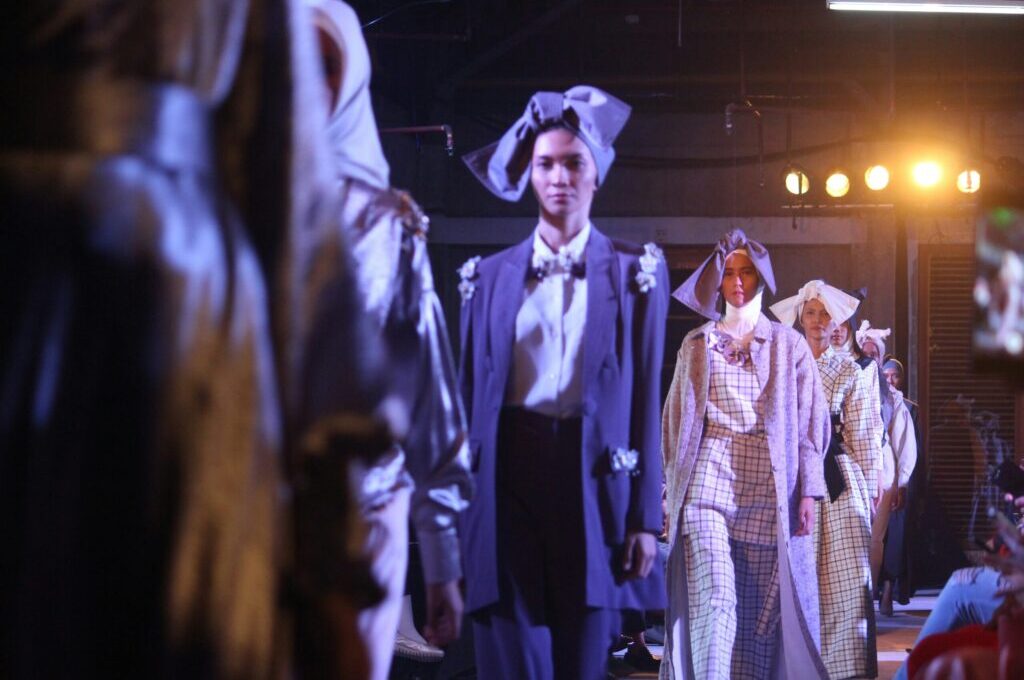
The programme combined daytime, evening, and main shows, complemented by a Pop-Up Market, side events, talks, and workshops. Designers came from both German- and French-speaking Switzerland, alongside selected international names from Germany, France, Belgium, Ghana, and Latvia. The programme brought together labels including Modeco, New Orchard, Atelier J. Santana, Coco Création, Selva Huygens, Ombre, Madame Badass, Intensify Me, Nova Noche, Tamara von Arx, Zano, Guju Gumpold, The Last Human, Fragile Base, Spacecrib, Amato, Judassime, Terje Vincentz, Maya Seyferth, Dobrżanska, as well as students from HEAD Genève.
The opening was made by Modeco Couture — opulent gowns, dramatic silhouettes, plenty of glam and theatre. The atmosphere overall felt curious rather than exclusive: less about spectacle, more about building something.
A central element was the collaboration with the Fair Fashion Award (Swiss Fair Trade), with a dedicated Sustainability Day where several presentations addressed responsible production and long-term thinking in design — not as a trend, but as structure.
Behind the Glitter: An Honest Reckoning
No first edition is without friction, and Zurich Fashion Week’s was no exception. After the event, reports emerged of unpaid invoices, frustrated sponsors, and internal conflicts — with several sponsors indicating they would not return the following year. The opening evening was chaotic for many attendees, with seating arrangements failing and no clear programme thread. The co-founder Remo Schmid had already been removed from the association before the event even began, adding to a turbulent backdrop.
These are serious issues, and they deserve to be named. A fashion week — like any cultural platform — runs on trust: between organisers, designers, sponsors, and audience.
What It Means for Swiss Fashion
Despite the behind-the-scenes turbulence, the creative energy on the runway was real. Designers approached form and material with clarity, and fashion school students brought a strong experimental edge, reminding observers how important fashion education remains in shaping the next generation.
The structural challenge Glauser identified remains true regardless of the organisational difficulties: Switzerland has world-class design schools, significant creative talent, and an international reputation — but no established local industry to absorb and sustain that talent. Most designers who want a career still leave.
Our Take
Zurich Fashion Week 2026 was imperfect, controversial, and — in spite of all of that — worth watching. First editions rarely get everything right. What matters is whether the underlying idea has merit. We think it does. Switzerland needs a platform that treats fashion as a serious cultural and economic discipline, not a luxury export. Whether the current organisation is the one to build it sustainably.
Sources:
Further readings:
- HAY-HAY – Zurich Fashion Week 2026: A New Chapter for Swiss Fashion
- The Gaze Magazine – Fashion’s Generative Force: Inside Zurich Fashion Week
- Luxury Tribune – Switzerland Joins the Fashion Week Calendar With Zurich
- Bluewin – Schwere Kritik an Zurich Fashion Week
- Kongresshaus Zürich – ZFW 2026
Photo: Raden Prasetya auf Unsplash
AI Information: We have worked with the AI assistant Claude, who helped us with the research, structuring and content development for this article. All AI-generated content has been carefully reviewed and adjusted to ensure it reflects our understanding and expertise. Although the AI assisted us, we take full responsibility for the content of this article and its accuracy.
Sorry, the comment form is closed at this time.